Pattern Library Insights
What 128 corporate venture cases teach us about why ideas fail — and what to do about it before the capital commits.
This is where THC publishes what the work surfaces. Framework explainers. Pattern Library findings. Anonymized case studies from the field. Contrarian positions on received innovation wisdom. One post every two weeks — no filler, no content marketing, no thought leadership theater.
If you are defending a venture inside a corporate organization right now, something here will be useful to you this week.
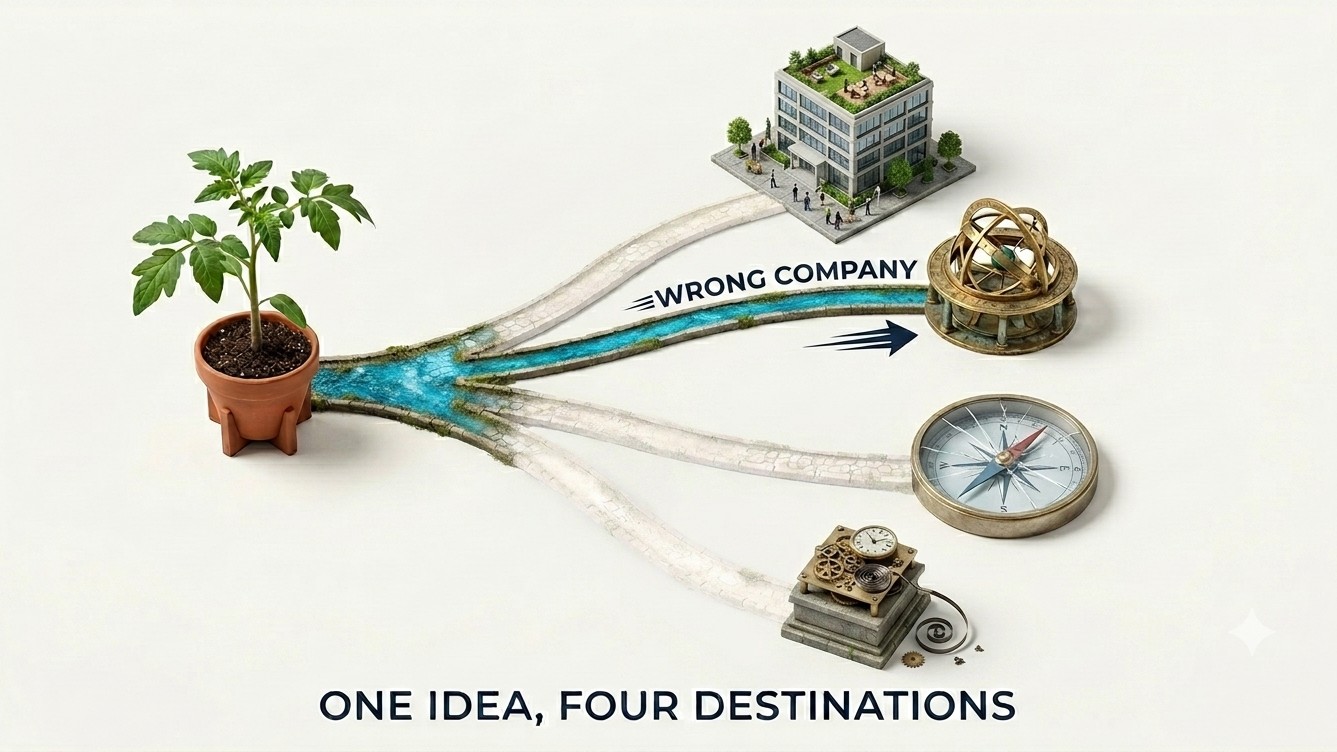
WRONG COMPANY: When the Idea Is Real and the Host Isn't
A WRONG COMPANY verdict means the venture is real, but the organization can't carry it. Here's why that finding is harder for a venture lead to deliver than NO-GO, and the four forward paths a real diagnostic names: license, partner, spin out, or handoff.
Read more →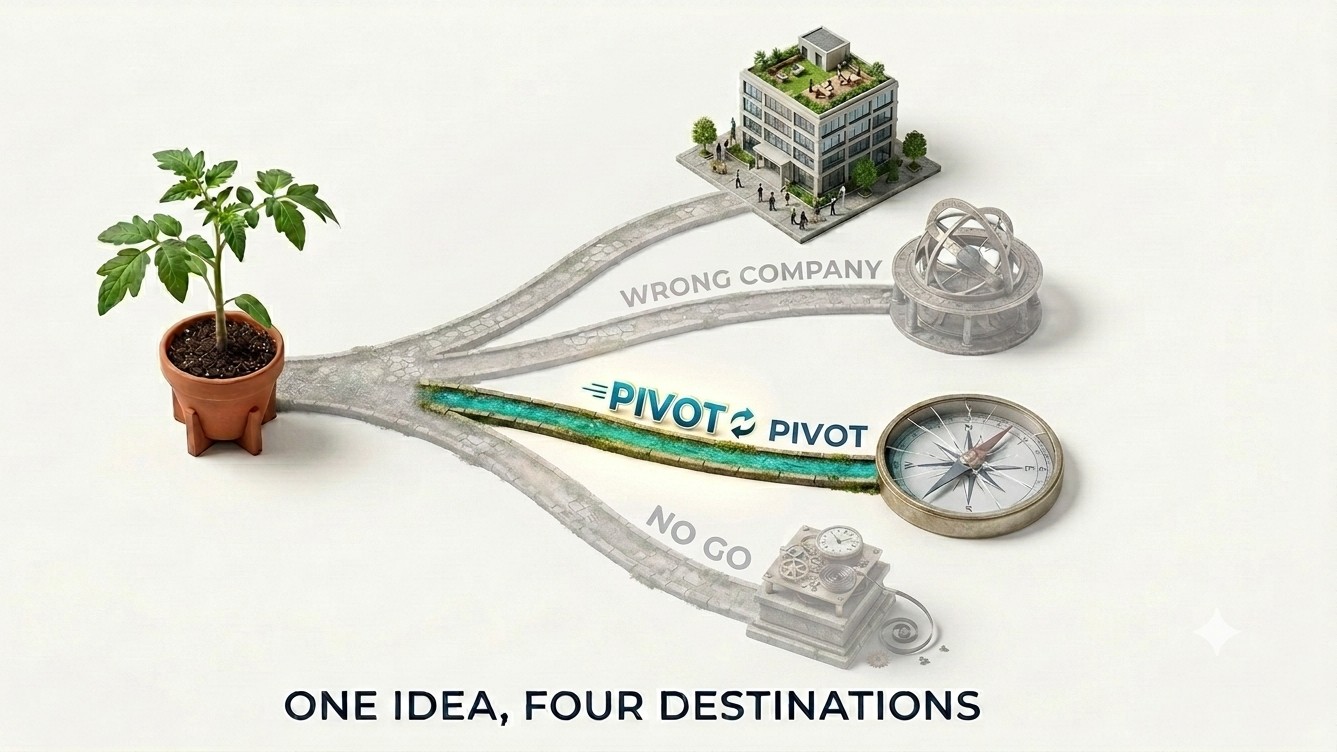
Four Types of Pivots (and Why Each Requires a Different Validation
A PIVOT verdict means your core insight is real—but your execution model is wrong. The buyer pivot, pricing pivot, channel pivot, and segment pivot each require specific validation before capital commits to Stage 2. Here's why each one matters.
Read more →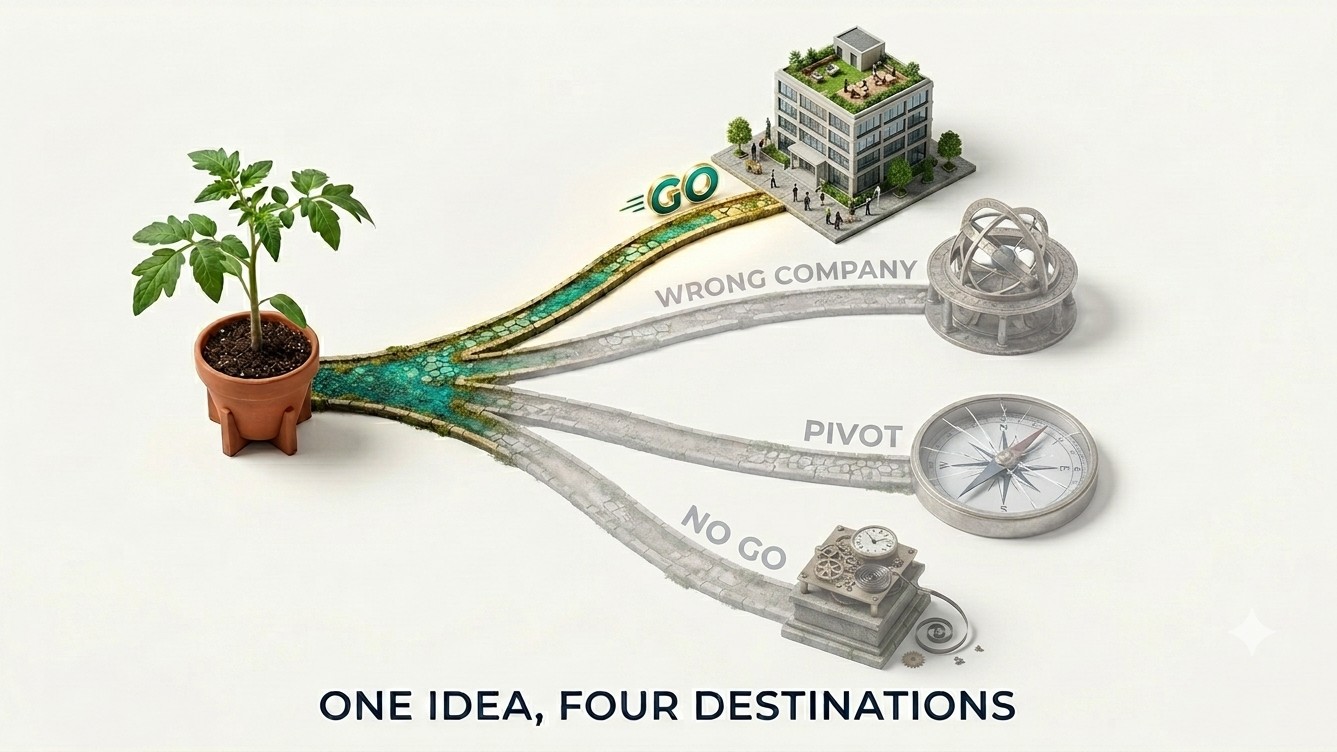
The Verdict Nobody Expects From a Venture Diagnostic Is Yes
A rigorous diagnostic isn't built to find reasons to say no. It's built to find the conditions under which yes is the right answer. Here's what the GO verdict actually means — and why a yes is only worth as much as the no behind it
Read more →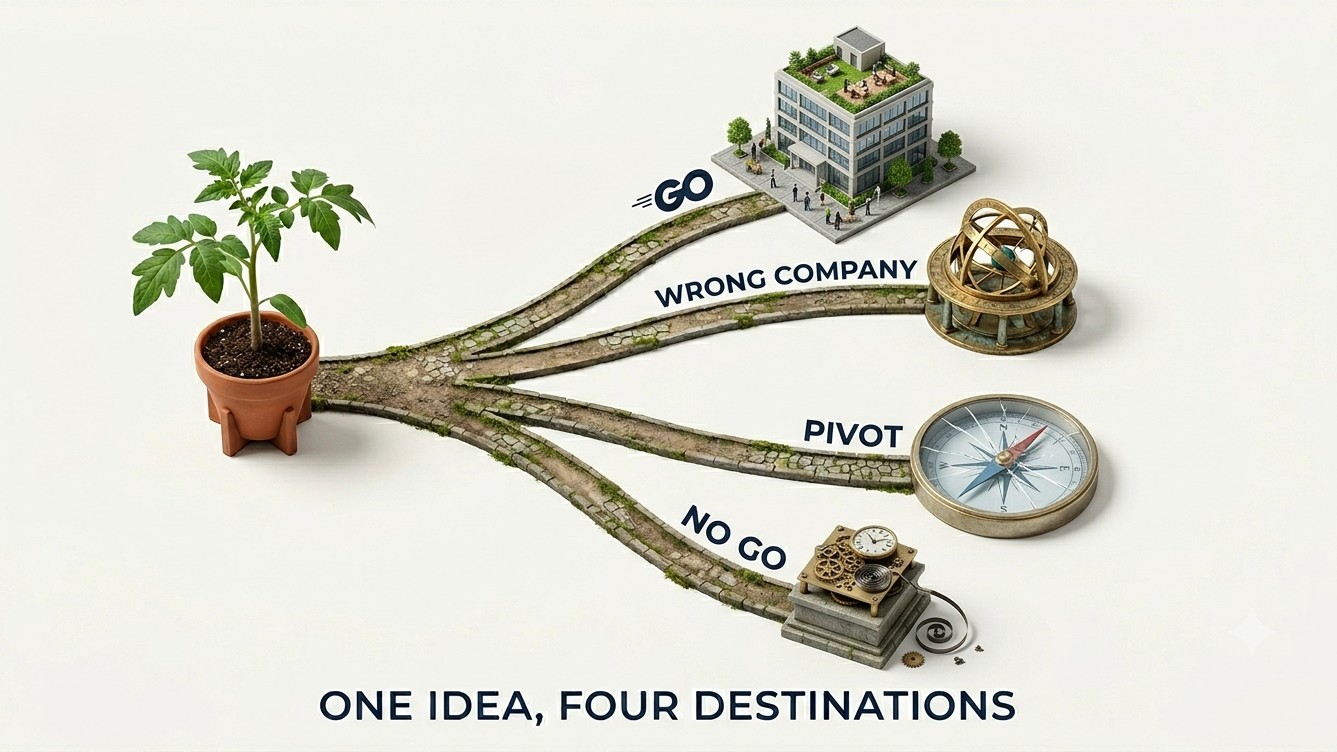
Before the Verdict: Can Your Company Actually Host This Venture?
Most corporate ventures don't fail because the idea was bad. They fail because the company was never built to carry it. A look at the fit question to ask before the money moves — and the four verdicts.
Read more →The Cheap 10%: Where Corporate Ventures Are Actually Decided
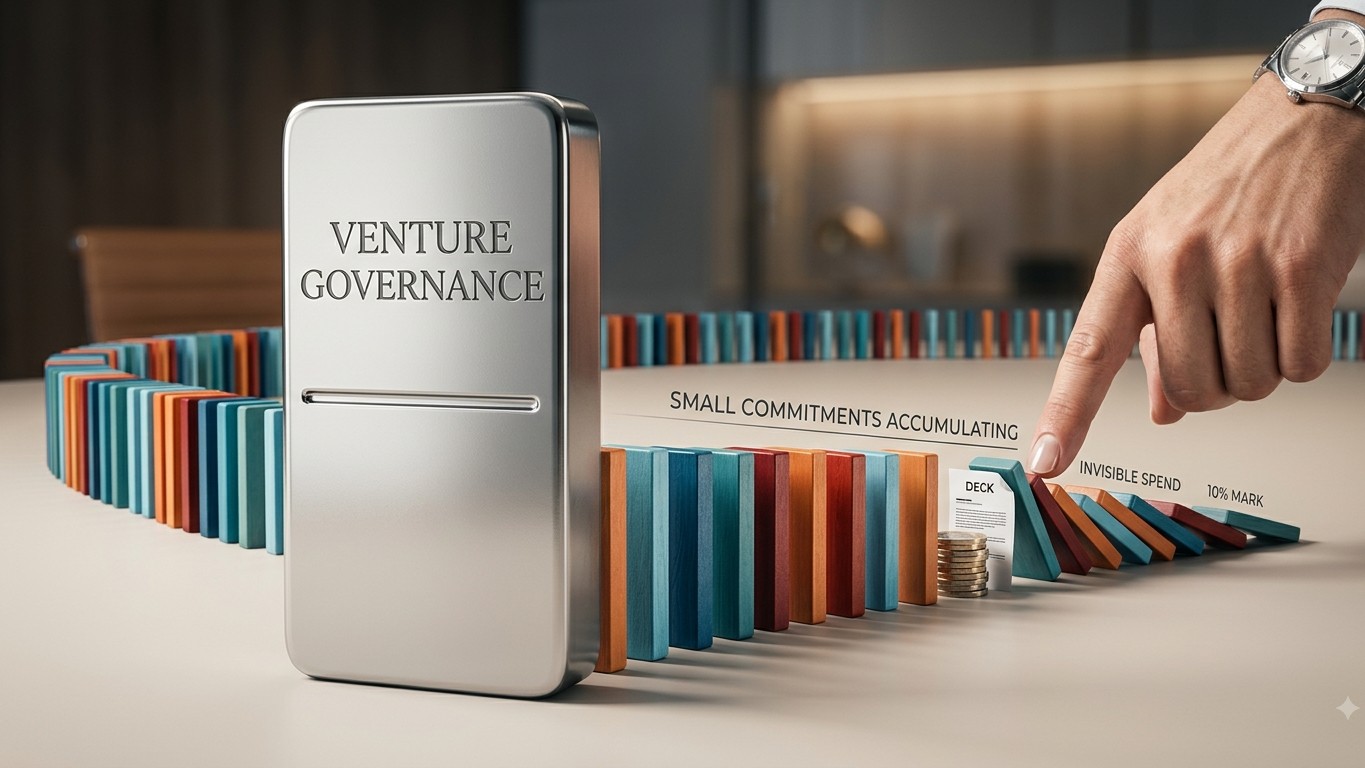
Less than 10% of a corporate venture's lifetime capital is spent before the decision to scale — yet that early slice decides whether the rest is well spent or wasted. Almost no one uses it to ask the two questions that matter most: does the idea hold, and does it hold here? A good idea in the wrong host fails the same way a bad one does — it just takes longer, and costs more, to find out.
Read more →You're being asked to fund something you can't fully evaluate.
The venture lead believes in it. The team is capable. The plan sounds plausible. Across 129 corporate venture cases, 77.5% had a structural problem the plan never surfaced. The diagnostic window is short. The capital window is not.
Read more →"The 10% Problem"
Less than 10% of a corporate venture's lifetime capital is deployed before the scale decision. That slice sets the direction for everything that follows. The diagnostic belongs at Stage 1 — because everything expensive comes after it.
Read more →“The Missing Layer in Corporate Venture Building”
“Most companies don’t fail at innovation because of ideas. They fail because the architecture around the work is wrong.”
Read more →What Your Budget Cycle Knows That Your Sponsor Doesn't
The organizational immune system doesn't announce itself. It just runs its normal process.
Read more →Less Than 10%: The Capital Profile Every CFO Should See Before Stage 2 Commits
In most corporate venturing portfolios, less than 10% of total lifetime venture capital is deployed before the decision to scale. That early slice sets the direction for everything that follows — and it is almost never subjected to a structured external diagnostic.
Read more →The 1/10/100 Principle: What a $1 Idea Actually Costs
Generating an idea costs a dollar. Developing it costs ten. Commercializing it costs a hundred. Less than 10% of a venture's lifetime capital is deployed before the scale decision. Most ventures fail after the hundred is already spent.
Read more →Autonomy Is Not Freedom: Why “Give the Team Space” Is Killing Your Venture
When sponsors say they are giving the venture team space to innovate, they usually mean a verbal commitment that the existing organizational rules will be relaxed. The existing rules win every budget cycle.
Read more →The $3M Logistics Build We Didn't Do
I once spent six months defending a venture that an honest structural read in week two would have flagged as a misfit. The idea was right. The host was wrong. The methodology exists because that mistake was avoidable and expensive.
Read more →What 128 Corporate Ventures Tell Us About Structural Fit
At N=128 in the THC Pattern Library, an RPP score of 2 or below predicts a NO-GO or WRONG COMPANY verdict in 96% of cases. That number is not about idea quality.
Read more →The 8-Question RPP Rubric: Why Most Ventures Fail Before They Start
The single most predictive variable for corporate venture success is not idea quality. It is whether the organizational host has the Resources, Processes, and Priorities the venture actually requires.
Read more →Get new Insights in your inbox.
One email per month. A field note from recent sprint work, one Pattern Library finding, and one piece of reading worth your time. No sales pitches. No republished LinkedIn posts. Content the subscriber list gets that does not appear anywhere else.
One email per month. Unsubscribe any time. Thomas writes it personally.